LIVING
SEPTEMBER 2026

an exercise to protect the back
by Terri Johnson
ACE Certified Personal Trainer and Group Fitness Instructor, Integrative Movement Specialist Foundations, and FitPro
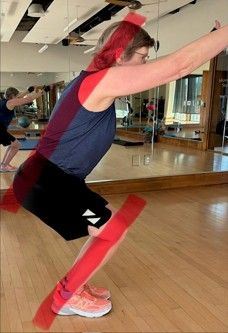
Proper alignment for a squat
Photo by Terri Johnson
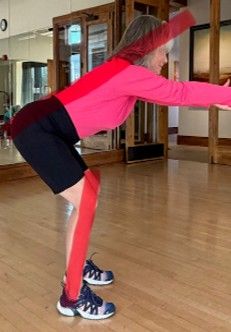
Improper Alignment
Photo by Teresa Lange Reinhard
August 8, 2026. Humans squat. Examples include getting into and out of chairs, and picking up pets or grandchildren. This functional movement is part of people’s everyday life. Therefore, it’s important to keep the muscles that allow us to squat strong and healthy.
There is no “perfect” squat. But there is your perfect squat. A perfect squat has alignment between the lower leg, shins/calves, and the torso. They are perpendicular. The angles of the ankle, knee and hip joints are the same. Because everyone’s mechanics are different; joints bend at different angles, every squat is unique. If you pay attention to that alignment, you are on your way to your perfect squat.
This alignment will:
- Keep the chest up
- The backend sitting back
Use the foot as a “tripod.”
- Ball under big toe, heel and ball under pinkie toe to keep the weight evenly distributed.
- Take care not to lean too much into the heels or the toes, or even the sides of the feet.
It helps to “push” up from the floor when rising from a squat to ensure use of the entire foot.
To keep the spine in a neutral and long position, think of the bump at back of head as having a hook under it pulling it up. This hook generally means the chin will be slightly tucked. This also means the gaze will go towards the floor, not straight ahead.
The main muscles that are used in a squat are the gluteal muscles, quadriceps, and hamstrings. Feeling those muscles means the alignment is correct! Perfecting this movement enables engagement in everyday activities safely. It is recommended to repeat three sets of 12 repetitions three times a week to build these muscles and find the perfect squat.